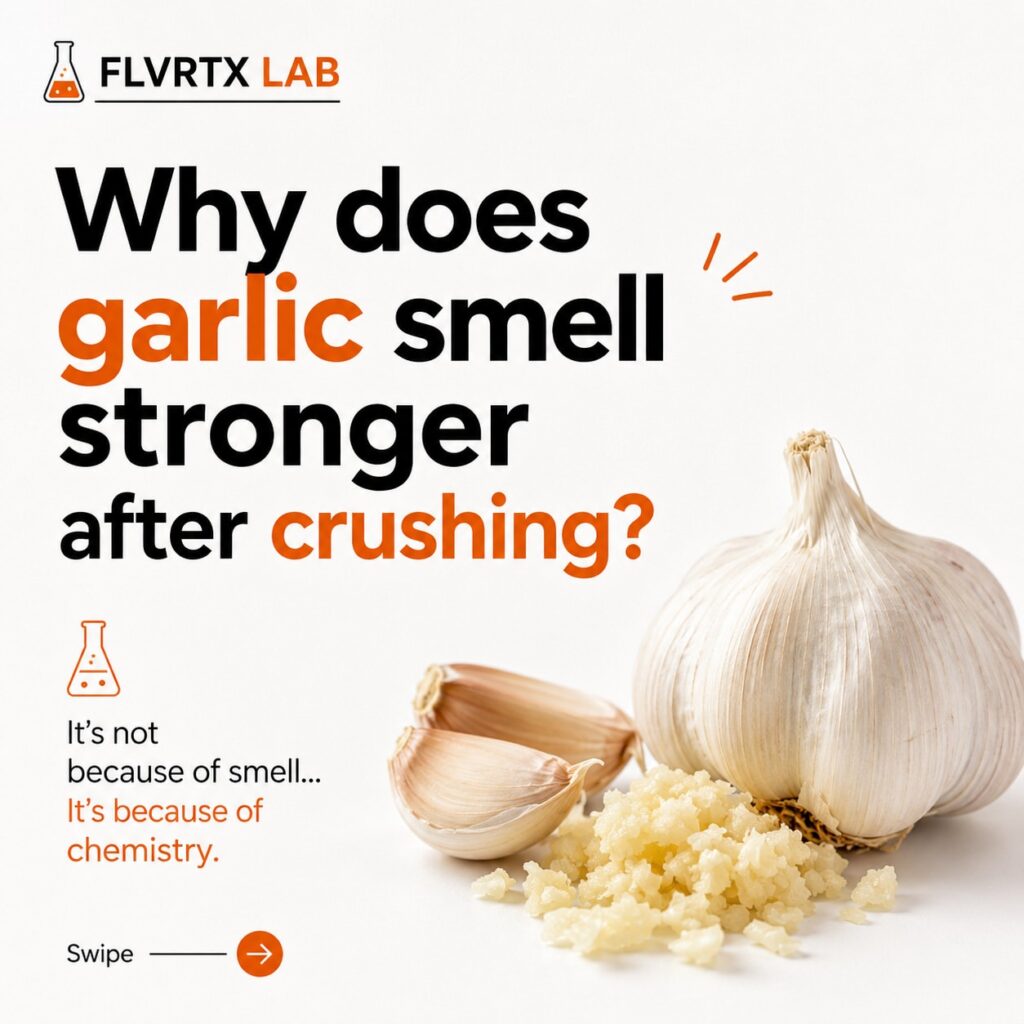
Have you ever noticed how crushed garlic smells much stronger than a whole garlic clove?
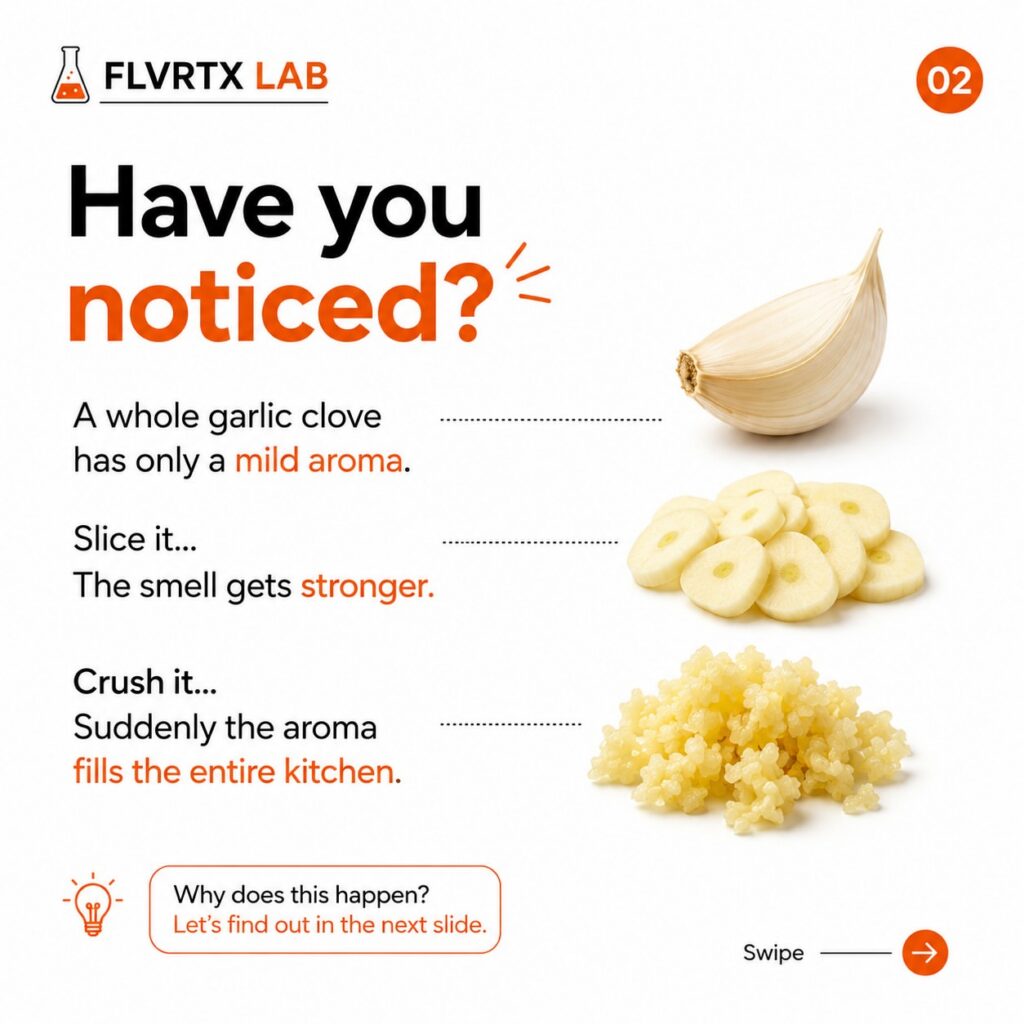
A whole garlic clove has a relatively mild aroma, but the moment you crush it, the smell becomes much stronger.
It may seem like crushing simply releases more of the garlic’s smell. But something more interesting is happening inside the clove.
Crushing garlic triggers a chemical reaction that creates new compounds responsible for its characteristic aroma and pungency.
Let’s see what happens inside a garlic clove when you cut, slice, or crush it.
Why does crushing change garlic’s aroma?
The difference starts with the structure of the garlic clove.
Inside an intact clove, important compounds are kept apart within its cells. One of these is alliin, while another is an enzyme called alliinase.
As long as the garlic remains intact, these components have limited contact with each other.
When you slice, chop, or crush garlic, you damage its cells. This allows the compounds that were previously separated to come into contact.
That is where the chemistry begins.
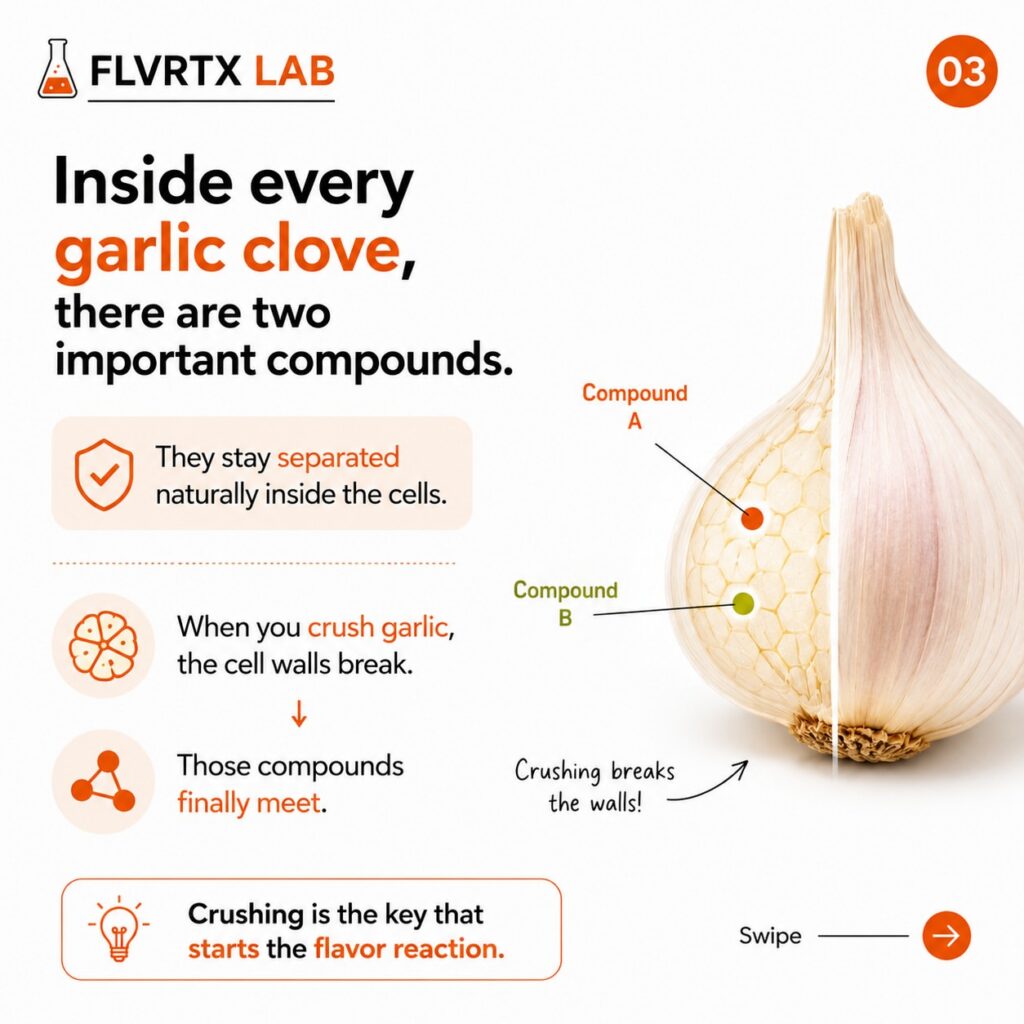
Crushing starts the reaction
Once the garlic cells are damaged, alliin and alliinase can interact.
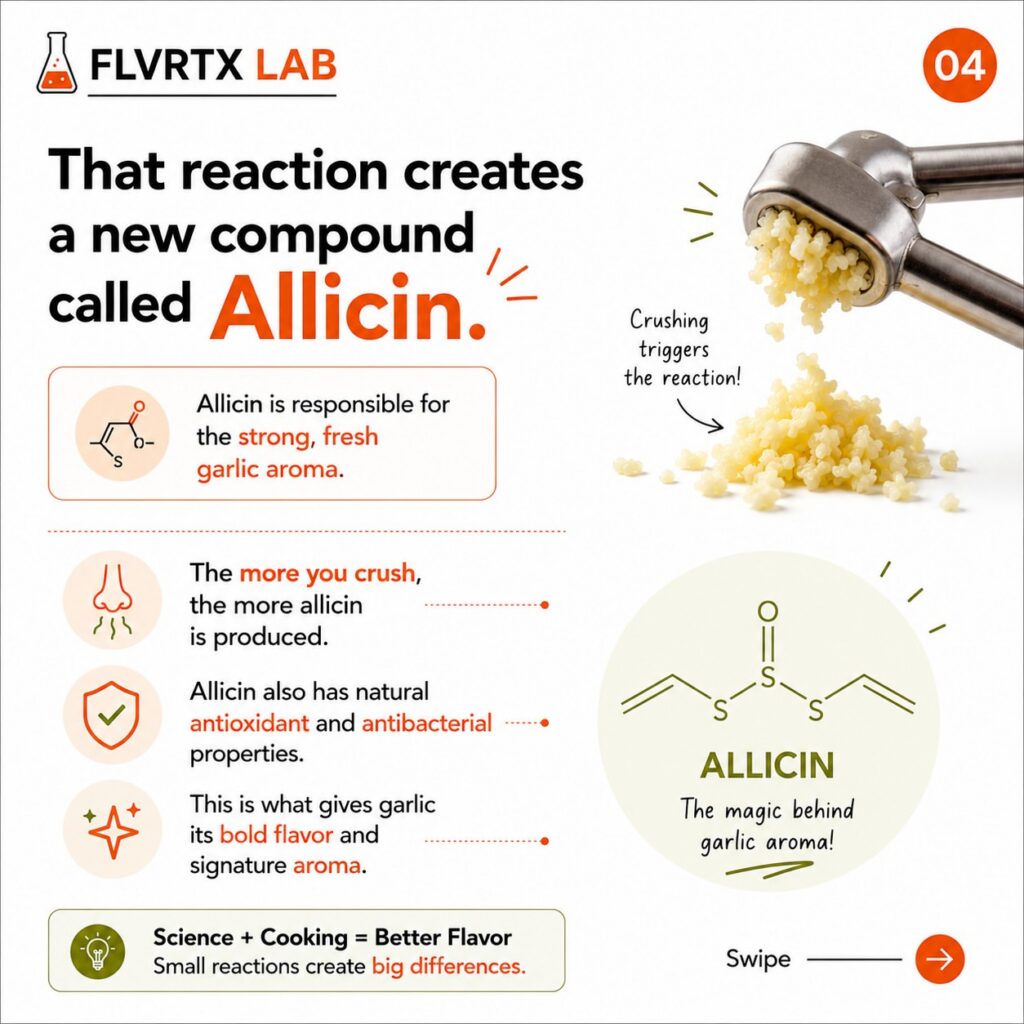
The enzyme alliinase acts on alliin, leading to the formation of allicin.
Allicin is a highly reactive sulfur-containing compound and is one of the major contributors to the characteristic fresh aroma and pungency of freshly crushed garlic.
That’s why crushing garlic doesn’t simply release an existing smell.
It triggers chemistry that produces new aroma compounds.
The more extensively the garlic tissue is disrupted, the more readily this reaction can occur, although the final amount of allicin also depends on factors such as garlic variety, freshness, preparation, and cooking conditions.
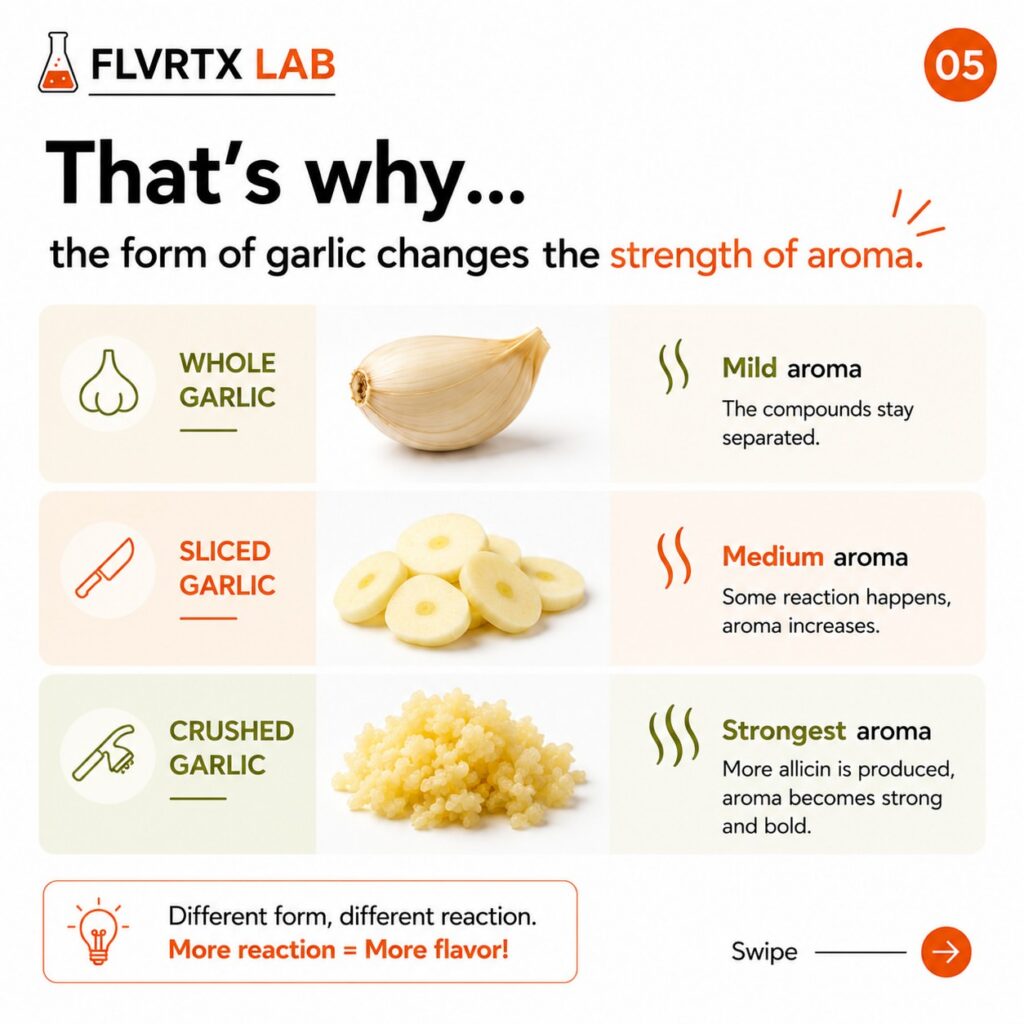
Whole, sliced, or crushed — does it matter?
Yes. The physical form of garlic changes how much of its cellular structure is disrupted.
Whole garlic
When the clove remains intact, there is relatively little cell damage, so the reaction between alliin and alliinase is limited.
Result: milder aroma.
Sliced garlic
Slicing damages more cells and creates more contact between the enzyme and its substrate.
Result: stronger aroma.
Crushed garlic
Crushing causes much greater tissue disruption, allowing the reaction to occur more extensively and rapidly.
Result: a much stronger fresh garlic aroma and pungency.
So the way you prepare garlic can influence not only its texture, but also the flavor and aroma you experience.
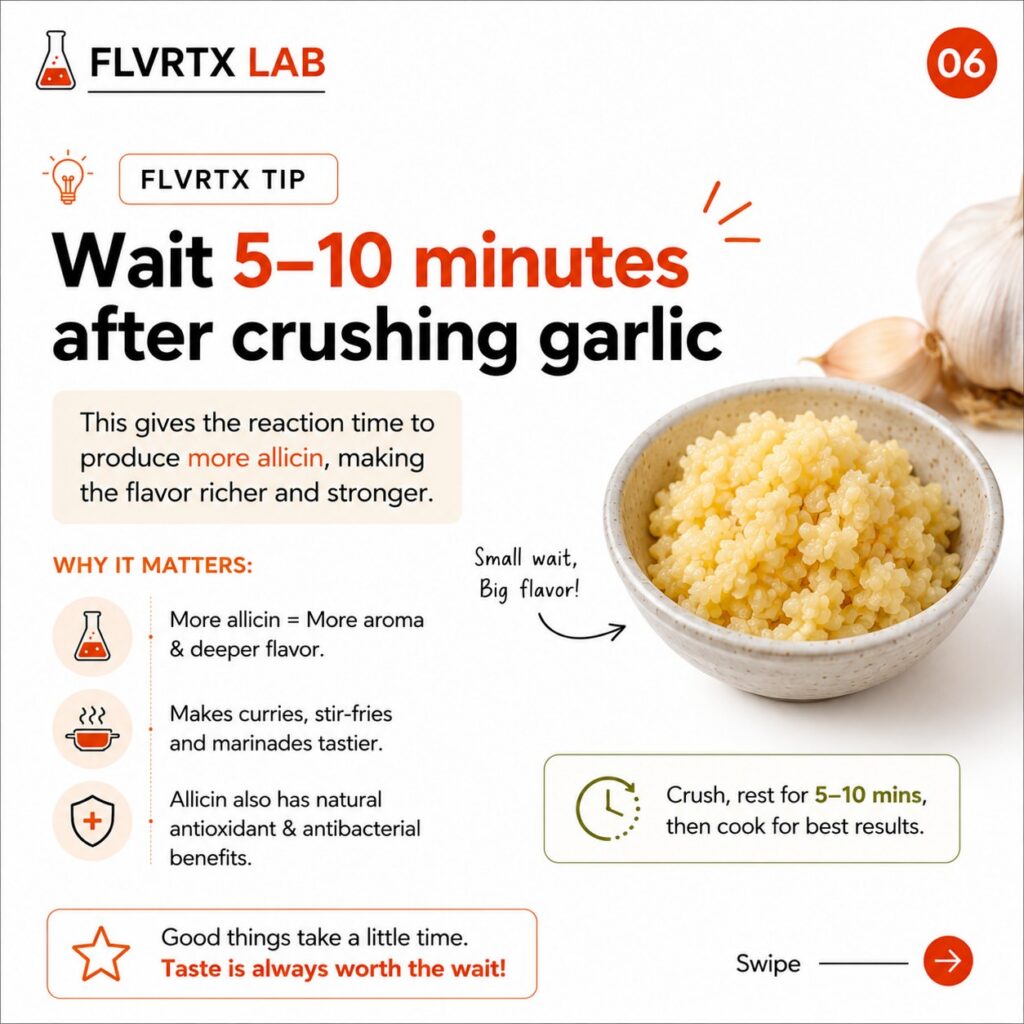
Should you wait after crushing garlic?
If you want to give the reaction some time to develop, you can let freshly crushed garlic rest for a few minutes before cooking.
A practical approach is to crush the garlic and let it sit for about 5–10 minutes before adding it to the pan.
During this time, the enzyme-driven reaction can continue producing allicin before cooking begins.
Keep in mind that heat, cooking time, garlic variety, freshness, and preparation method all affect the final aroma and flavor. So the 5–10 minute wait is best treated as a practical cooking tip rather than a precise rule.
FLVRTX TIP
Crush → Rest → Cook
When you want a stronger fresh garlic character, give crushed garlic a short rest before cooking.
The FLVRTX takeaway
Garlic doesn’t become more aromatic simply because we crush it.
We change what is happening inside it.
Crushing damages the cells, brings alliin and alliinase together, and triggers the formation of allicin and other compounds that contribute to garlic’s distinctive aroma and pungency.
So the next time you crush a garlic clove and the whole kitchen suddenly smells of garlic, remember:
Small changes in how you prepare an ingredient can create big changes in flavor.
That’s food science in action.