
Have you ever noticed how a squeeze of lemon can make fish smell cleaner and taste fresher?
Why does lemon make fish taste fresher? A squeeze of lemon can make fish smell cleaner and taste brighter, but the reason goes beyond simply adding sourness.
It may seem like lemon simply adds sourness, but there is more happening than that.
Fish naturally contains compounds that contribute to its characteristic aroma. Some of these compounds can become more noticeable as fish ages, creating the familiar “fishy” smell.
Lemon changes the chemistry around those compounds while also adding acidity and brightness to the overall flavor.
So why does lemon make fish seem fresher?
Let’s break down the food science.

The Lemon-Fish Flavor Mystery
You squeeze lemon over fish and suddenly the aroma seems cleaner and the flavor feels brighter.
But lemon isn’t literally removing the fish from the fish.
So what is actually happening?
The answer begins with fish aroma compounds and the way acidity can change their chemical behavior.
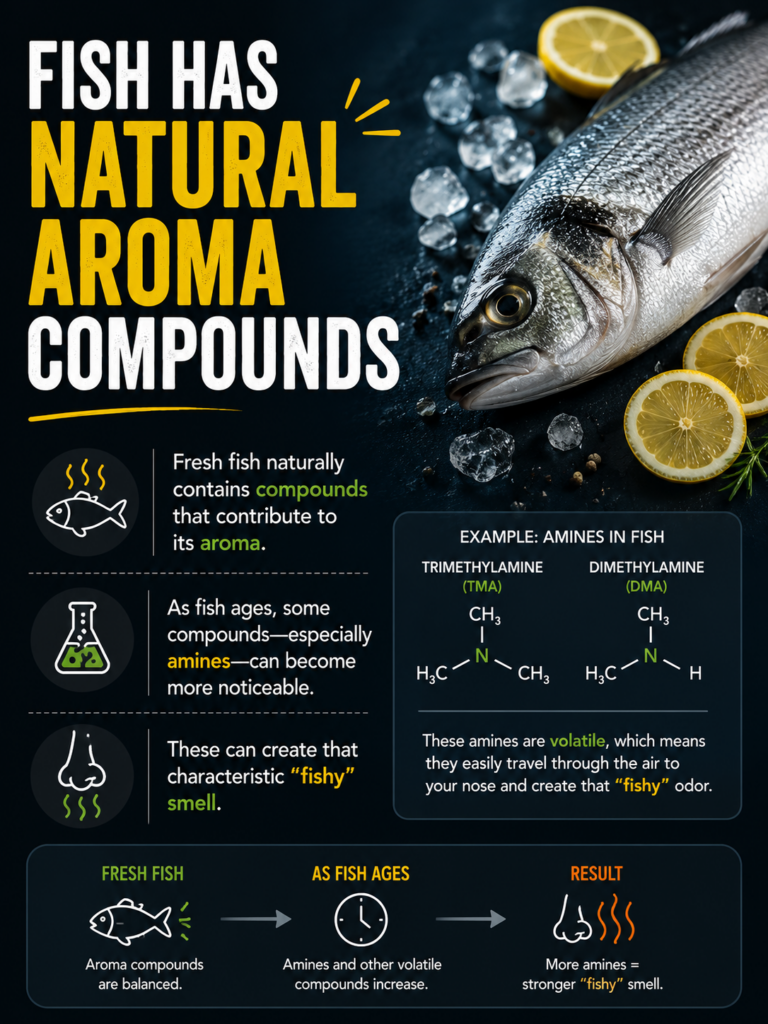
Where does the “fishy” smell come from?
Fresh fish naturally contains many compounds that contribute to its aroma.
Among them are amines, including compounds such as trimethylamine (TMA). These compounds are volatile, meaning they can move easily into the air and reach your nose.
As fish ages, changes in the fish tissue can make some of these compounds more noticeable.
That’s one reason older fish can develop a stronger fishy odor.
The important point: the smell you perceive comes from volatile molecules reaching your nose.
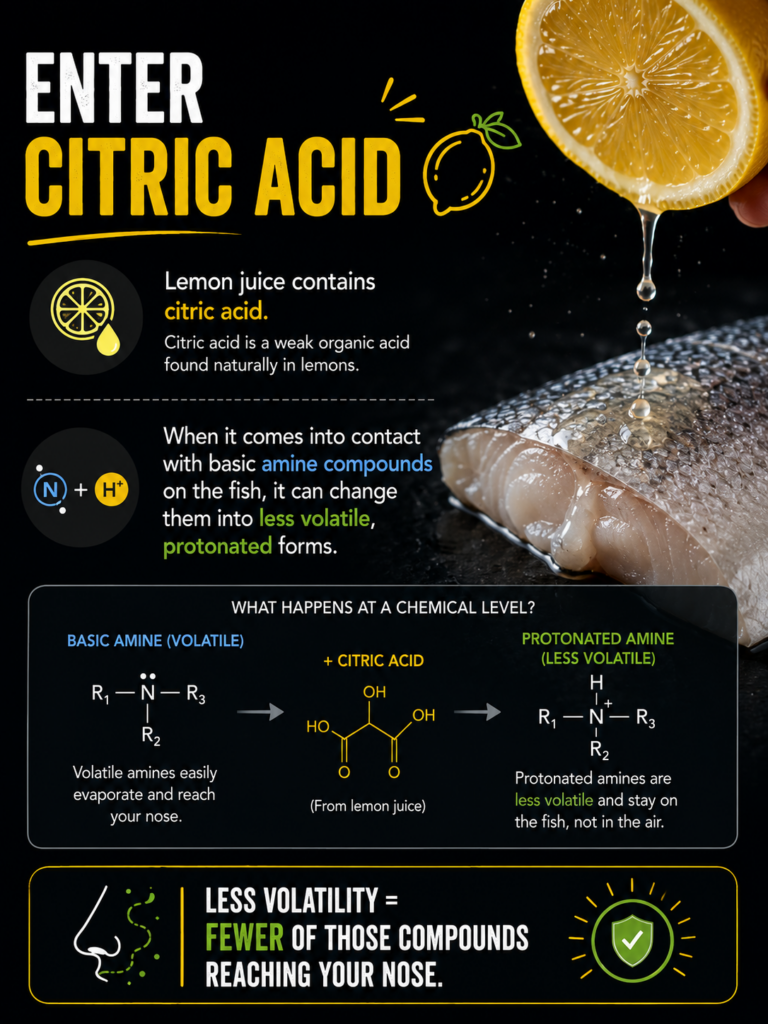
Enter: Citric Acid
Lemon juice contains citric acid, a naturally occurring organic acid.
When an acidic ingredient such as lemon juice comes into contact with basic amine compounds, it can cause them to become protonated.
This changes their chemical form and generally makes them less volatile.
And that matters because less volatile compounds are less likely to escape into the air and reach your nose.
In simple terms:
More volatile compounds → easier to smell
Less volatile compounds → harder to smell
That’s one important reason lemon can make fish seem less “fishy.”
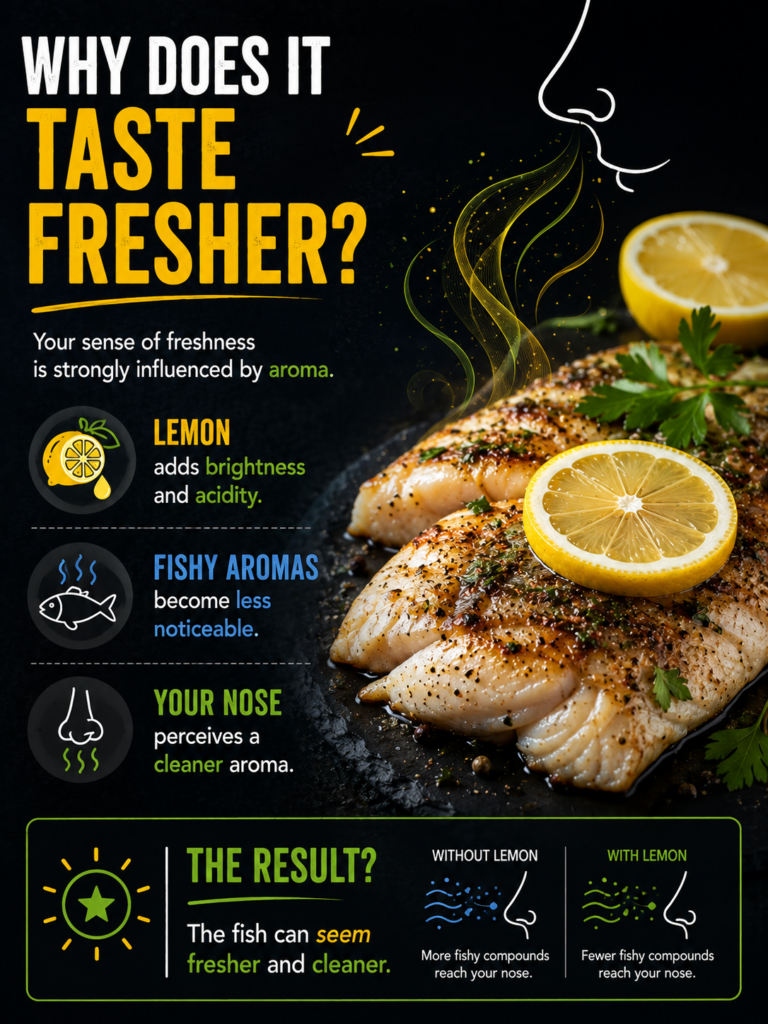
Why Does Lemon Make Fish Taste Fresher?
There is another part of the story: flavor perception.
Our experience of food is strongly influenced by aroma. When fewer fishy-smelling compounds reach your nose, the fish can seem cleaner and more pleasant.
At the same time, lemon adds its own acidity and bright citrus character.
So you’re experiencing two things together:
Less noticeable fishy aroma + bright acidity = a fresher overall impression
This doesn’t mean lemon magically changes old fish into fresh fish.
It changes the way some aroma compounds behave and adds flavors that complement the fish.
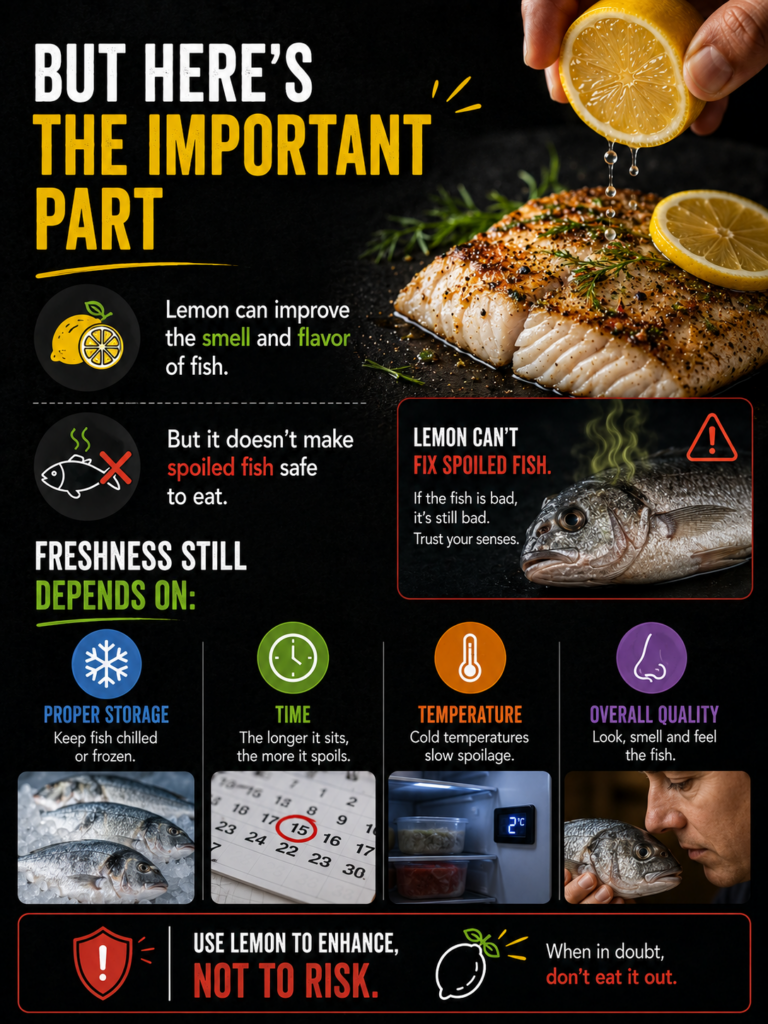
Lemon Can Enhance Fish — But It Can’t Rescue Spoiled Fish
This is an important distinction.
Lemon can change aroma and flavor, but it does not make spoiled fish safe to eat.
Fish freshness still depends on factors such as:
- Proper storage
- Time and temperature
- Handling
- Overall quality
If fish has clearly spoiled, adding lemon doesn’t reverse that spoilage.
Lemon is a flavor enhancer, not a food-safety fix.
The FLVRTX Takeaway
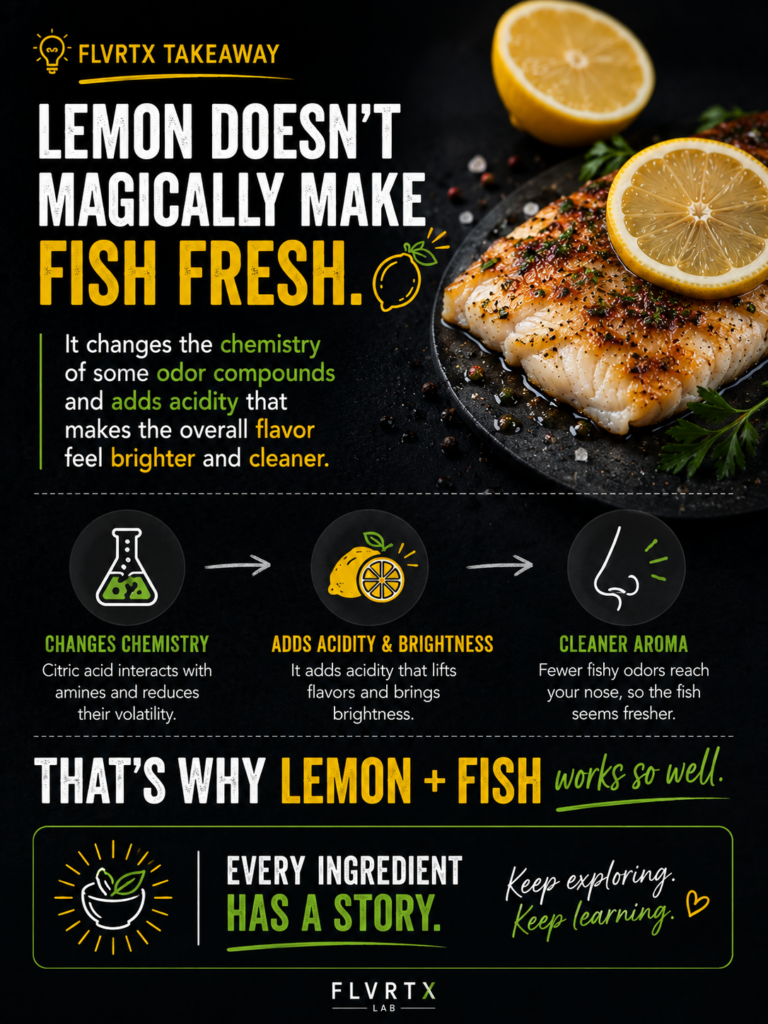
Lemon doesn’t magically make fish fresh.
It changes the chemistry of some odor compounds, adds acidity, and influences how we perceive the fish’s aroma and flavor.
Citric acid can reduce the volatility of certain amines, meaning fewer of those compounds reach your nose.
At the same time, lemon’s acidity adds brightness that complements the natural flavor of fish.
That’s why lemon + fish works so well.
A simple squeeze of lemon is doing more than adding sourness.
It’s food science in action.