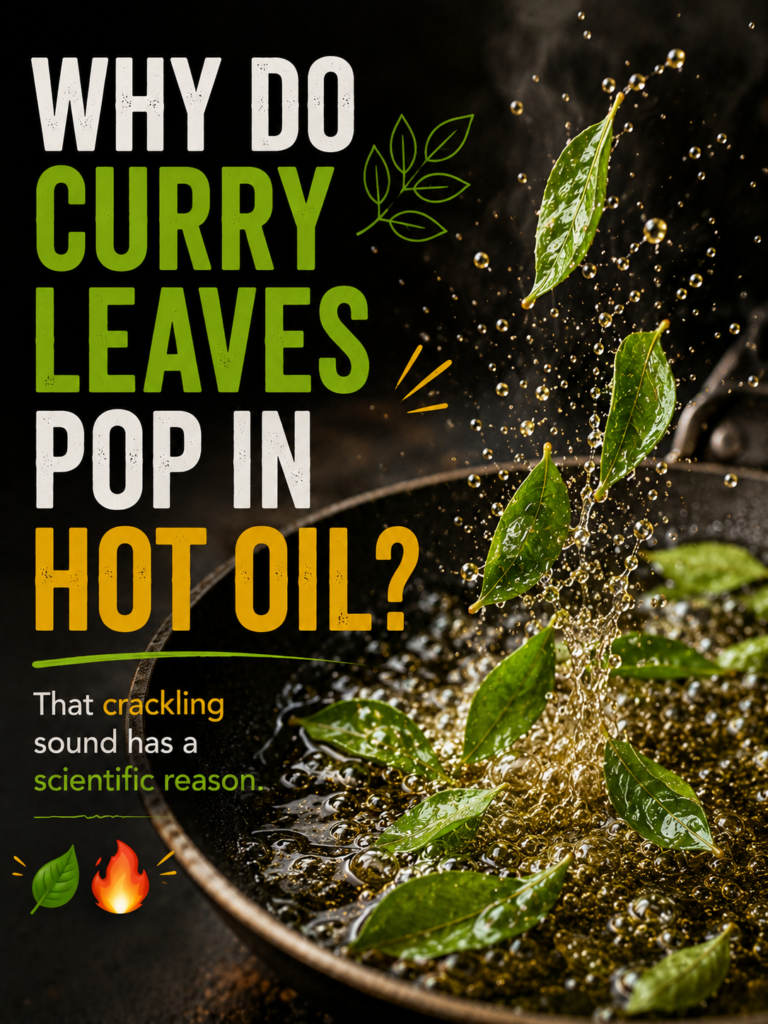
Why do curry leaves pop in hot oil? Drop fresh curry leaves into hot oil and you’ll hear it immediately — crackle, pop, and splutter.
It may look like the leaves are reacting dramatically with the oil, but the main reason is much simpler: moisture meets very hot oil.
Fresh curry leaves contain water, and there can also be moisture remaining on their surface after washing. When that moisture encounters hot oil, it heats rapidly and begins turning into steam.
The rapidly expanding steam is responsible for much of the familiar popping and splattering.
But that’s only half the story. The heat also helps release aromatic compounds from the curry leaves, allowing their characteristic fragrance to spread through the oil and into the dish.
Why Do Curry Leaves Pop in Hot Oil?
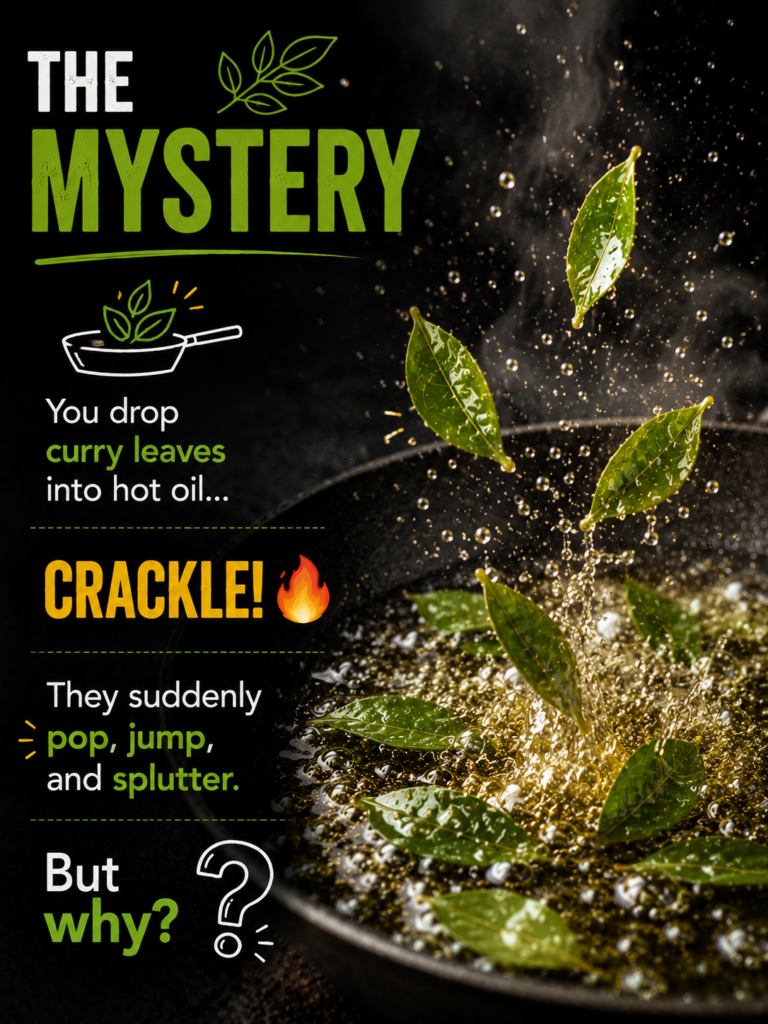
You drop a handful of curry leaves into hot oil.
CRACKLE!
The leaves jump, bubbles appear around them, and tiny droplets of oil may fly out of the pan.
Why does something as small as a curry leaf create such a noticeable reaction?
The key isn’t that the leaf is somehow “fighting” with the oil. The important factor is the moisture associated with the leaf.
When that moisture is exposed to intense heat, it can rapidly change from liquid water into water vapour, or steam.
And when steam forms quickly inside hot oil, things can get noisy.
It’s Actually Water
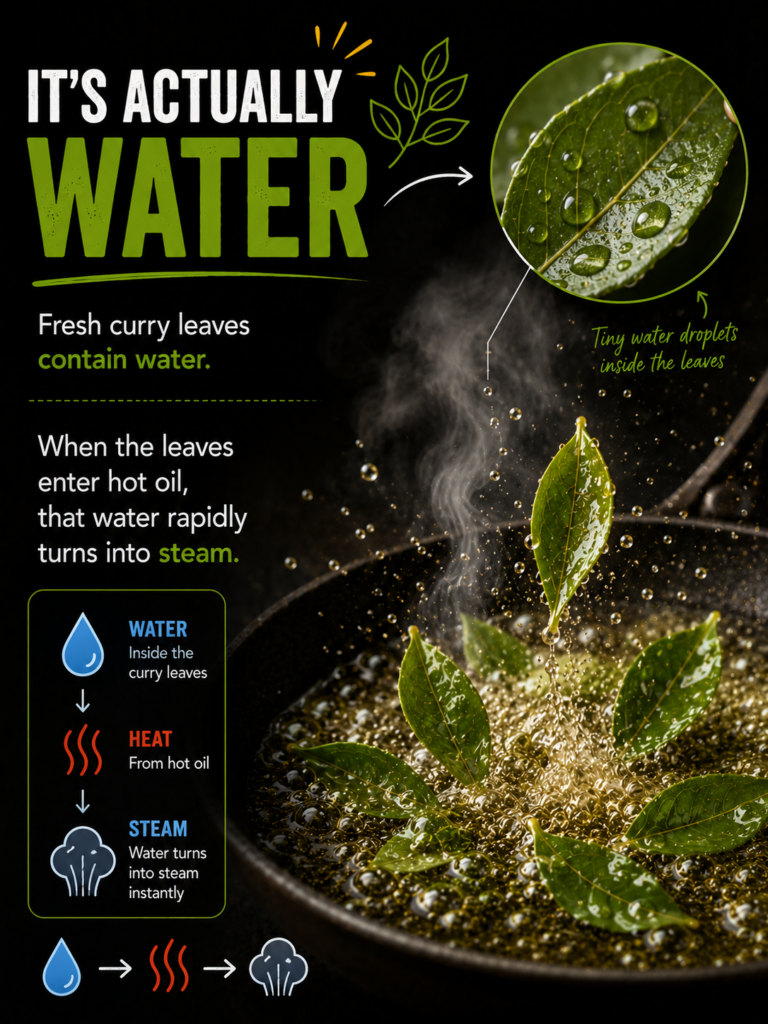
Fresh curry leaves naturally contain moisture.
When they enter hot oil, that moisture is exposed to a temperature much higher than water’s normal boiling point. It therefore heats rapidly and can change into steam.
Think of the process as:
💧 Moisture → 🔥 Heat → 💨 Steam
The important part is the speed of this transformation. Water slowly heated in a pan can simply evaporate. But moisture suddenly exposed to very hot oil can vaporize rapidly.
That rapid formation of steam creates bubbles and movement around the leaf, producing the characteristic crackling sound.
So the next time you hear curry leaves popping, remember: water is playing a major role in that sound.
Oil and Water Don’t Mix
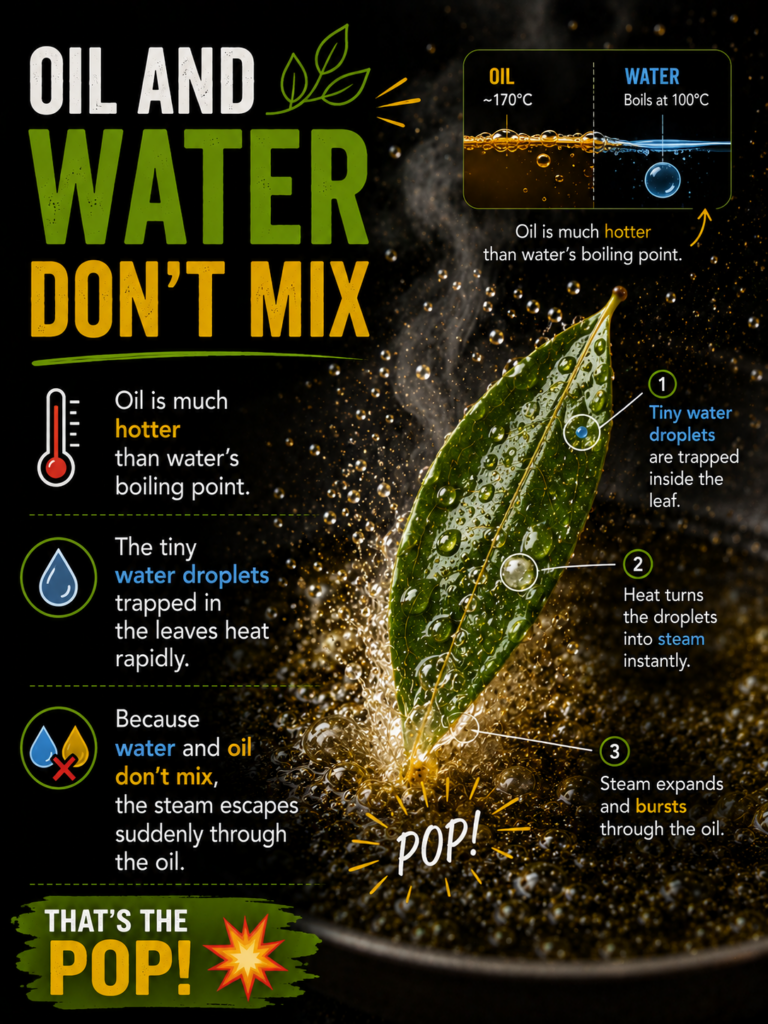
Here’s where the situation becomes more dramatic.
Cooking oil can be heated well above 100°C, while water boils at about 100°C at sea-level atmospheric pressure.
So when moisture from the curry leaves enters very hot oil, it can rapidly turn into steam.
Oil and water also don’t mix. This means the newly formed steam doesn’t simply blend into the oil.
Instead, the steam forms bubbles and pushes through the surrounding oil as it escapes.
Because steam occupies much more volume than the liquid water from which it formed, this expansion happens quickly.
That sudden expansion is what creates the characteristic pop and crackle. 💥
This is also why adding wet ingredients to hot oil can cause much more splattering than adding dry ingredients.
Why Does the Oil Splutter?
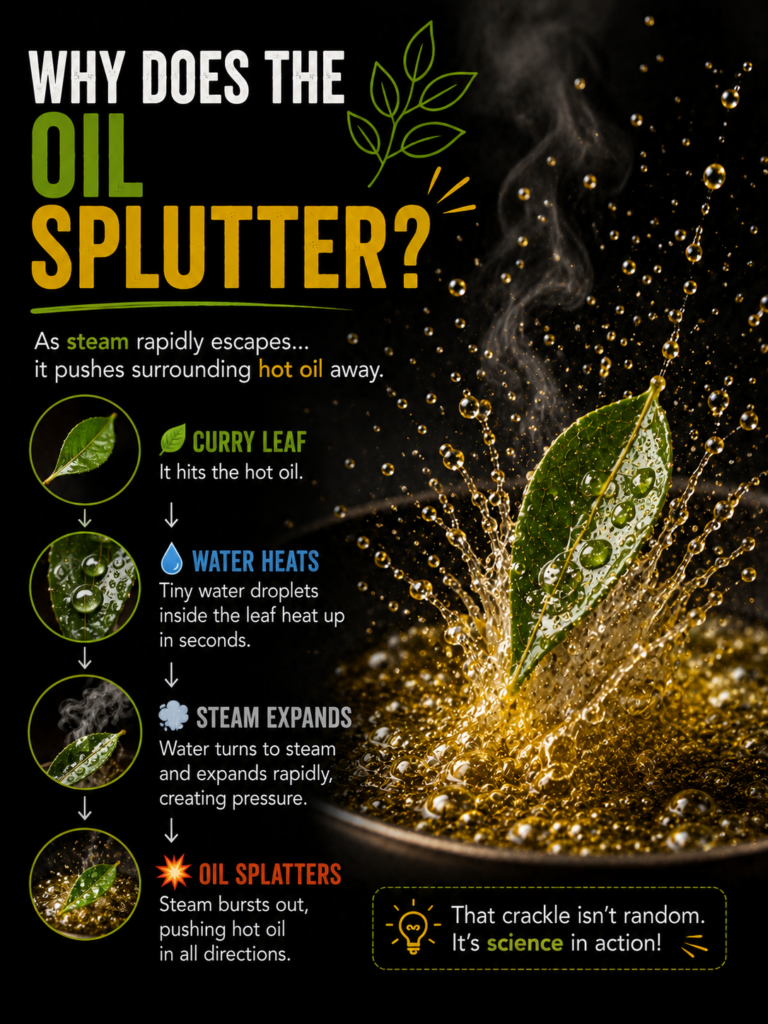
The popping sound and the oil splatter are closely connected.
As moisture rapidly changes into steam, the steam expands and forces its way through the surrounding oil.
You can think of the sequence like this:
🌿 Curry leaf
↓
💧 Moisture heats rapidly
↓
💨 Steam forms and expands
↓
💥 Steam escapes through the oil
↓
🫧 Oil is displaced and splatters
The splattering isn’t because the oil itself is boiling. Instead, rapidly expanding steam is disturbing and displacing the hot oil around it.
That’s why a wet curry leaf can make a pan of hot oil suddenly become much more active.
And because those oil droplets can be extremely hot, it’s always better to add curry leaves carefully and avoid holding your face or hands directly over the pan.
Why Are Curry Leaves Added to Hot Oil?
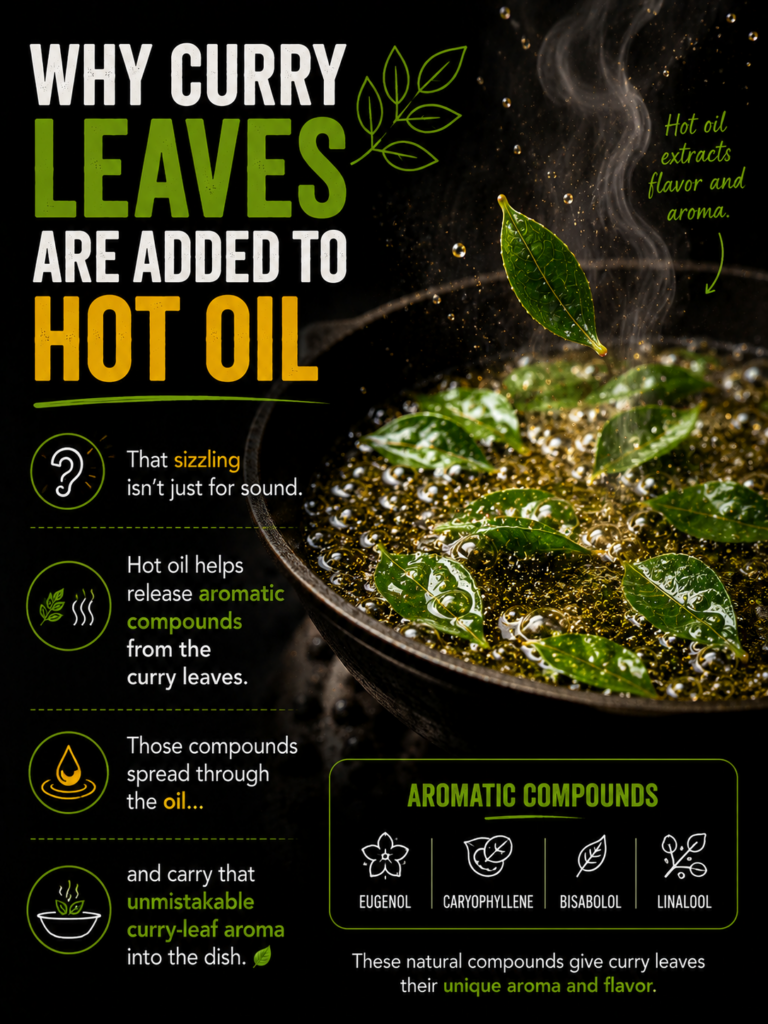
Now we get to the part that really matters for cooking.
The crackle isn’t the purpose. The aroma is.
Curry leaves contain naturally occurring volatile aromatic compounds that contribute to their distinctive fragrance and flavor.
When the leaves come into contact with hot oil, heat helps release some of these compounds. Because many aroma compounds are able to dissolve into oil, the oil can act as a carrier and distribute their aroma through the dish.
This is one reason tempering is so effective.
The hot oil isn’t simply heating the curry leaves. It is helping transfer their characteristic aroma into the surrounding oil and, ultimately, into the food.
So while you hear:
CRACKLE! 🔥
something else is happening:
the oil is capturing and carrying curry-leaf aroma. 🌿
That’s why curry leaves are often added early in a tempering step rather than simply stirred into the finished dish.
The FLVRTX Takeaway
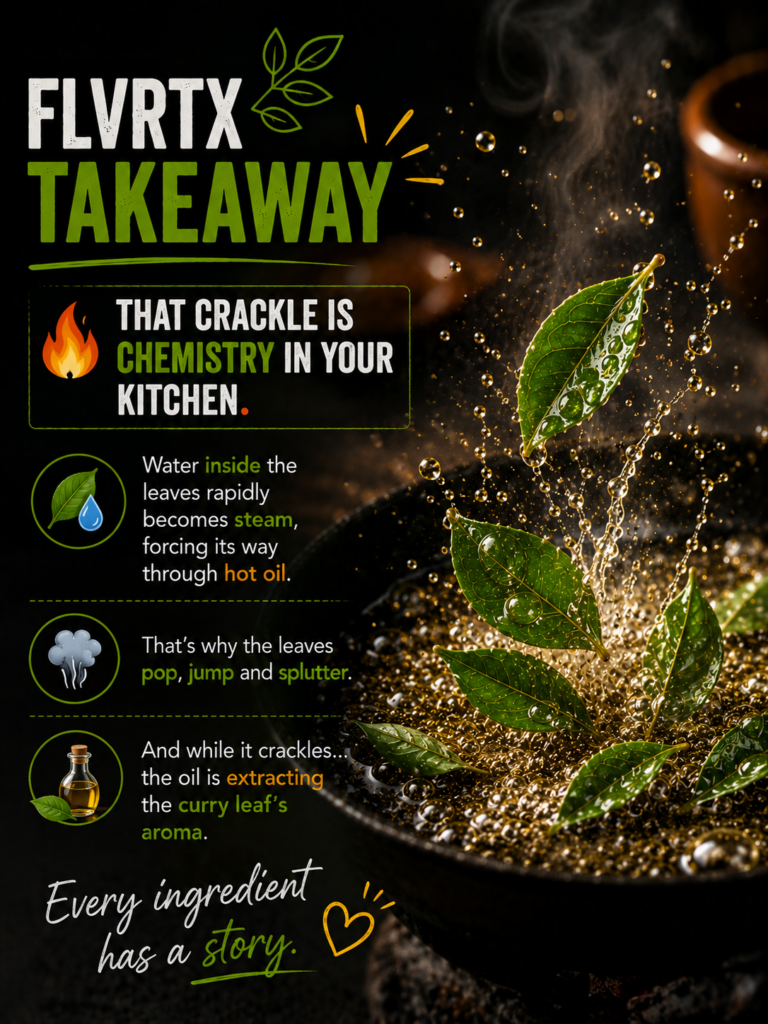
That crackle is chemistry in your kitchen. 🔥
Fresh curry leaves contain moisture. When they meet very hot oil, that moisture heats rapidly and can turn into steam.
As the steam expands and escapes through the oil, it creates bubbles, movement, crackling and sometimes splattering.
At the same time, the heat helps release aromatic compounds from the curry leaves, while the oil helps carry those aromas throughout the dish.
So that little crackle is actually telling you that several things are happening at once:
Moisture is becoming steam.
Steam is disturbing the hot oil.
Heat is releasing aroma.
The next time curry leaves hit your tempering oil and the pan suddenly comes alive, you’ll know what’s happening.
Every ingredient has a story.