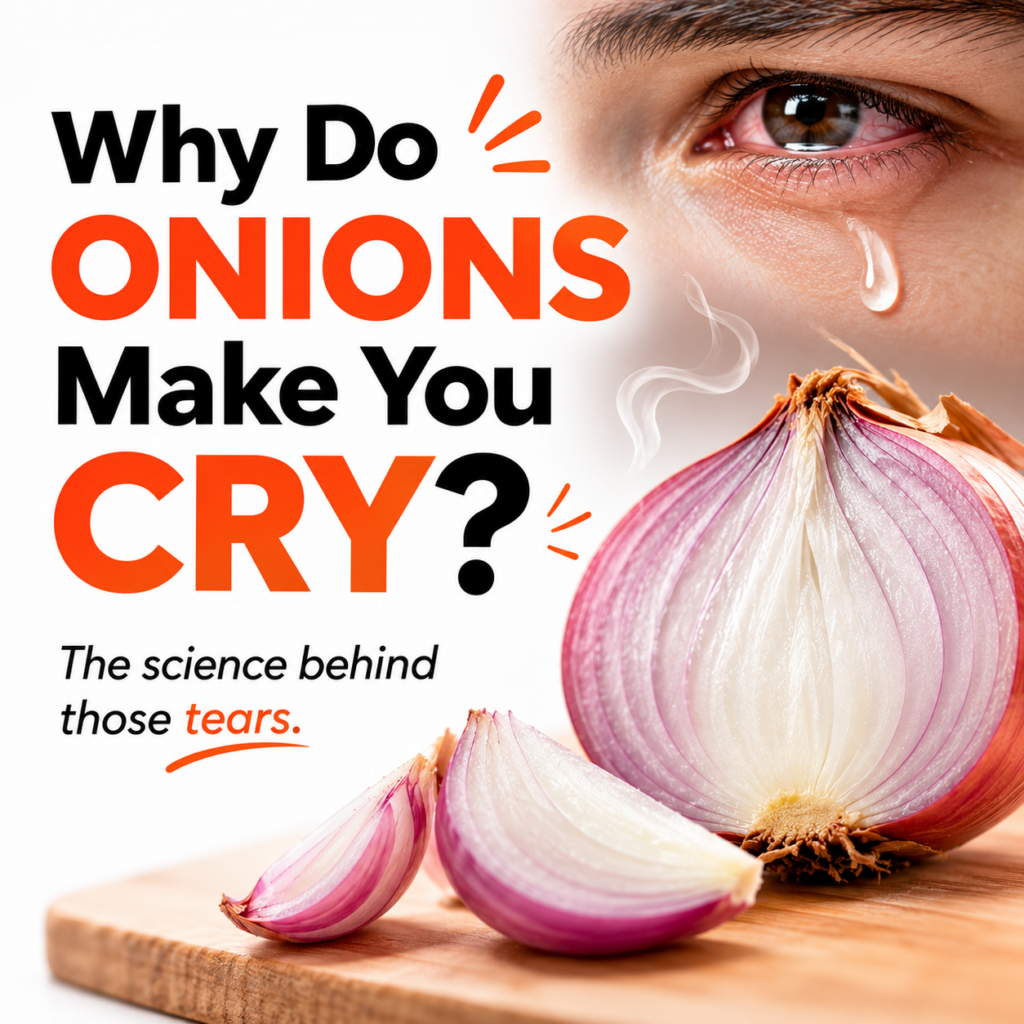
Why do onions make you cry? Have you ever wondered why cutting an onion can turn a simple cooking task into a tearful experience?
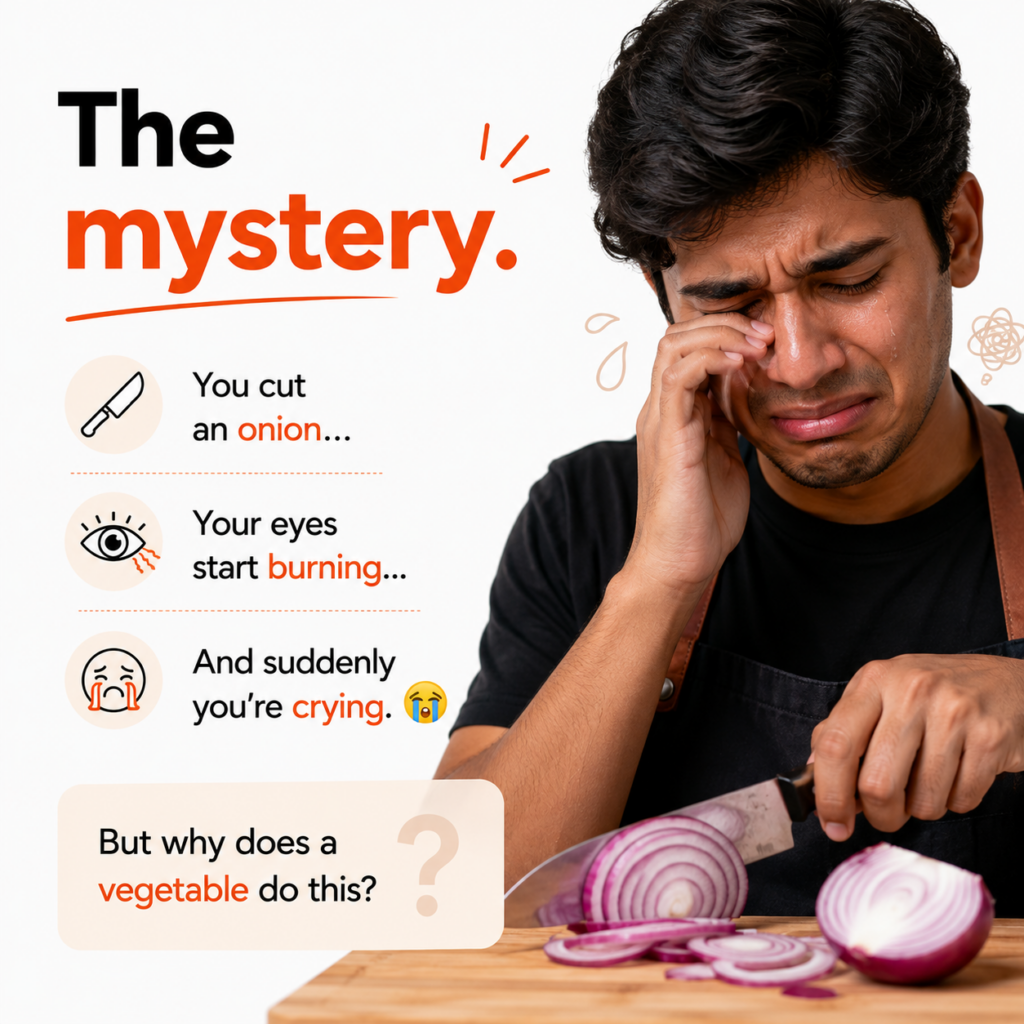
You cut the onion, your eyes start burning, and before you know it, you’re wiping away tears.
But the onion isn’t making you cry because it is “sad.” 😭
Something much more interesting is happening inside the onion.
Cutting damages the onion’s cells and triggers a chemical reaction that produces a volatile compound. When that compound reaches your eyes, your body responds by producing tears.
Let’s see what actually happens when you cut an onion.
What happens when you cut an onion?
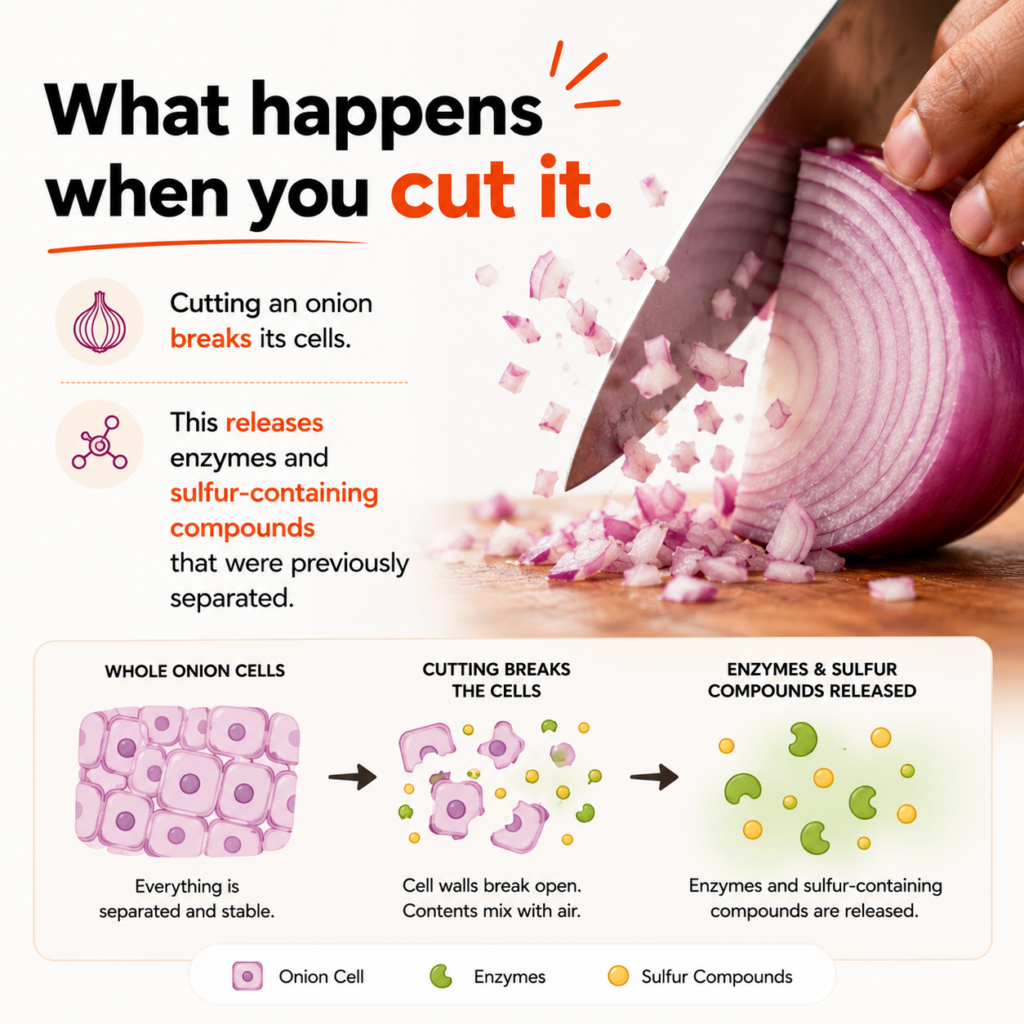
An onion is made up of many tiny cells that normally keep different substances separated.
When the onion is intact, these compounds remain largely contained within their respective cellular compartments.
But cutting an onion changes that.
The knife damages the cells and breaks down the barriers that kept those compounds separated.
This allows enzymes and sulfur-containing compounds to come into contact and begin a chemical reaction.
In other words, cutting the onion doesn’t simply release a smell that was already there.
It starts a chain of chemical reactions that creates new compounds.
The chemical reaction behind the tears
Once the onion’s cells are damaged, enzymes and sulfur-containing compounds interact.
One of the important products of this reaction is a volatile compound called syn-propanethial-S-oxide.
This compound is often referred to as the onion’s lachrymatory factor because it is responsible for triggering the tearing response.
Because it is volatile, it can move through the air from the freshly cut onion toward your eyes.
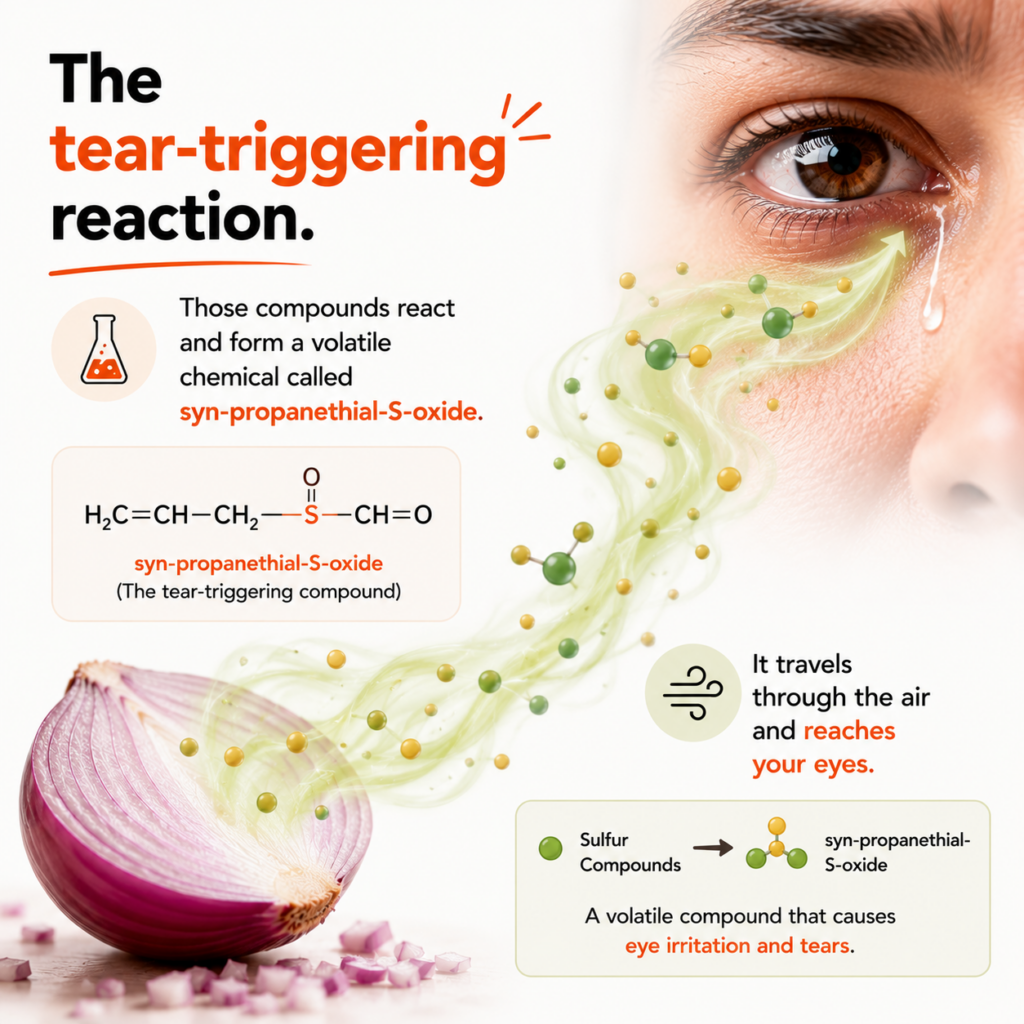
When the compound reaches the surface of your eyes, it irritates the sensory nerves there.
And that’s when your body’s defense system kicks in.
Why Do Onions Make You Cry?
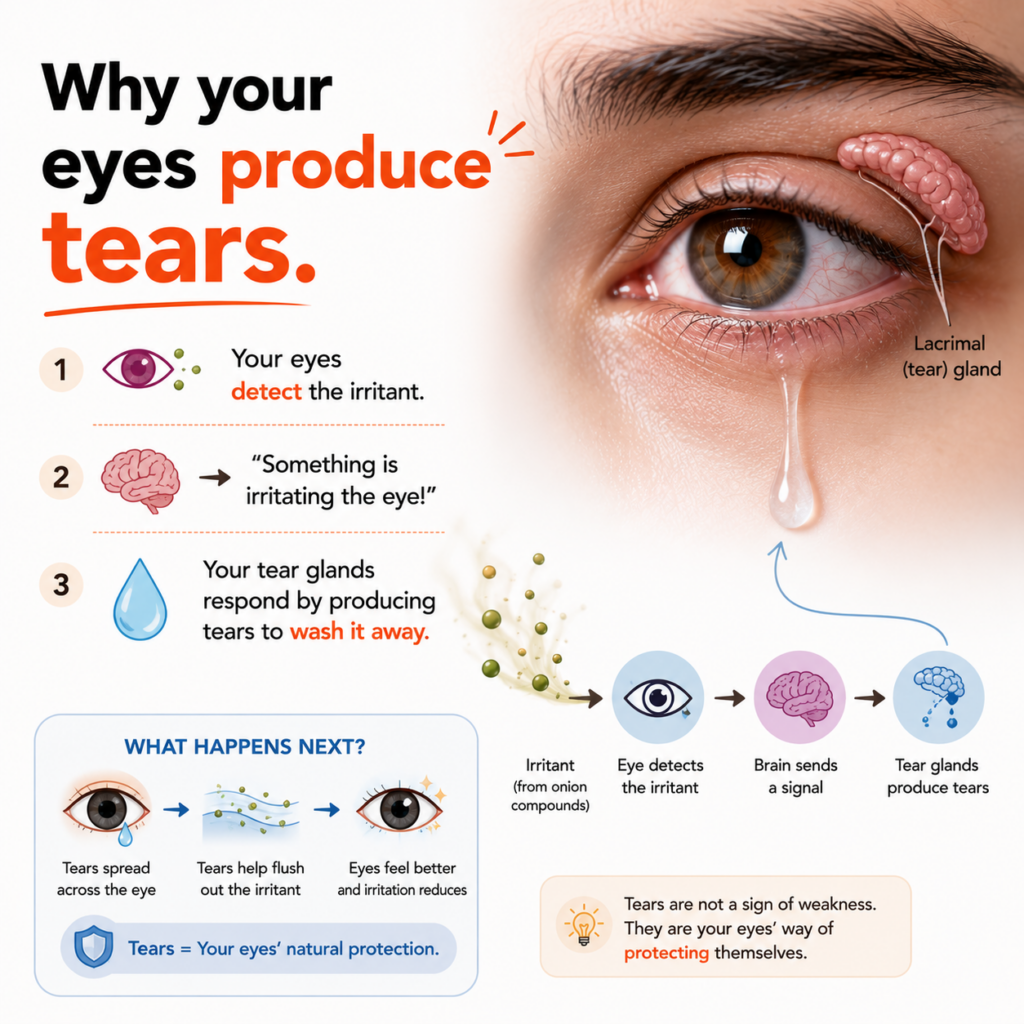
Your eyes are extremely sensitive to irritants.
When the onion-derived compound reaches your eyes, your sensory nerves detect the irritation and send a signal through your nervous system.
Your tear glands respond by producing more tears.
The tears help dilute and wash away the irritating substance from the surface of your eyes.
So the tears aren’t the problem — they’re your body’s solution to the problem.
That’s why your eyes can suddenly start watering even though you weren’t feeling emotional.
Your body is simply trying to protect your eyes.
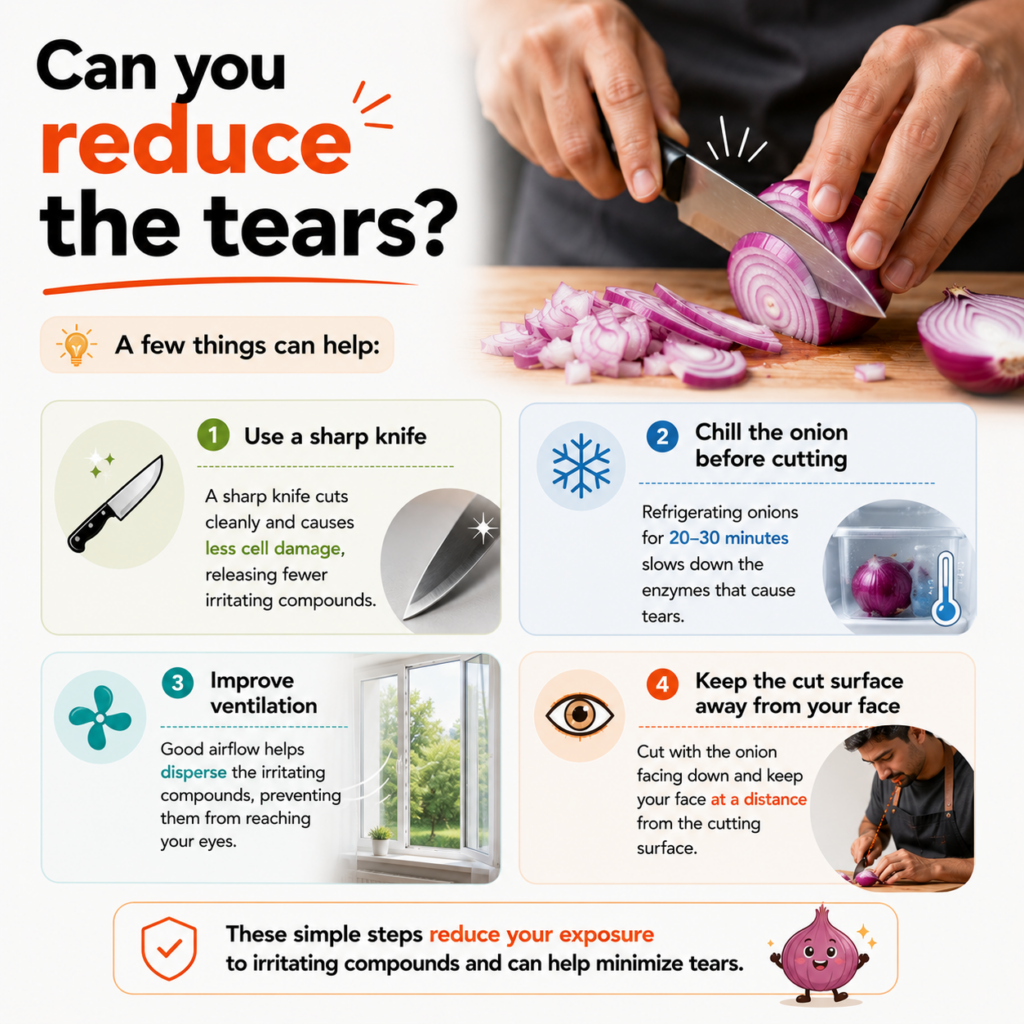
Can you reduce the tears?
You can’t completely stop the chemical reaction, but you can reduce your exposure to the irritating compounds.
A few simple techniques can make cutting onions much more comfortable.
Use a sharp knife
A sharp knife makes cleaner cuts and can reduce unnecessary crushing of the onion tissue. Less tissue damage can mean less release of irritating compounds.
Chill the onion before cutting
Chilling an onion before cutting can slow the chemical reactions involved in producing the tear-triggering compounds.
Try refrigerating the onion for around 20–30 minutes before cutting.
Improve ventilation
Good airflow can help move volatile compounds away from your face.
Cutting near an open window, using an exhaust fan, or improving ventilation can reduce how much of the irritant reaches your eyes.
Keep the cut surface away from your face
Positioning the onion so that the freshly cut surface isn’t directly below your face can reduce the amount of volatile compound reaching your eyes.
FLVRTX TIP
If onions always make you cry, start with three simple changes: use a sharp knife, chill the onion, and improve airflow.
The FLVRTX takeaway
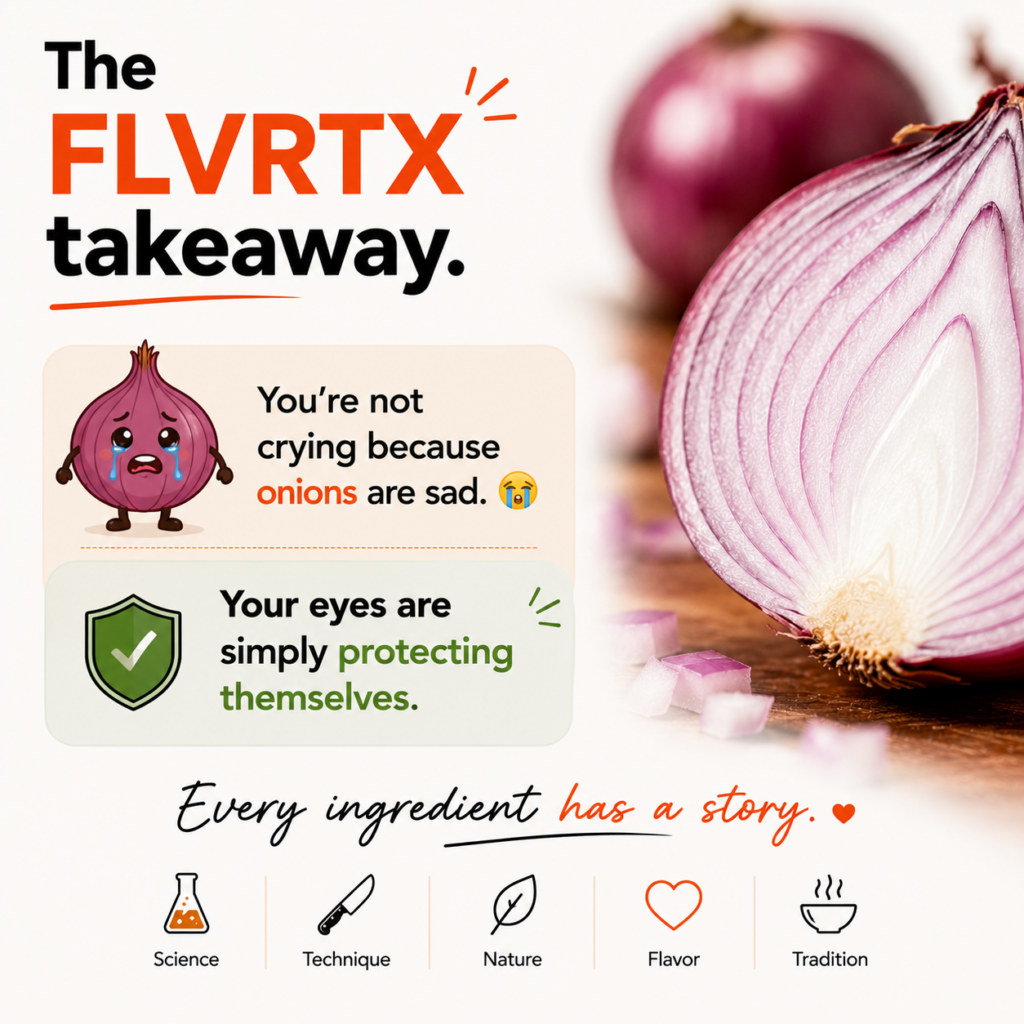
You’re not crying because onions are sad. 😭
Your eyes are simply protecting themselves.
Cutting an onion damages its cells, bringing enzymes and sulfur-containing compounds together. This creates a volatile irritant that travels through the air and reaches your eyes.
Your eyes detect the irritation, your nervous system sends a signal, and your tear glands respond by producing tears.
So the next time an onion makes you cry, remember:
It’s not an emotional reaction. It’s food chemistry in action.
Small changes in how you prepare an ingredient can create surprisingly big differences in your cooking experience.
Every ingredient has a story.